Didier Dagueneau. The man who refused the obvious.
Didier Dagueneau. The man who refused the obvious.
Didier Dagueneau. The man who refused the obvious.
He took one of wine’s most recognisable grapes and asked it to become something less predictable.
He took one of wine’s most recognisable grapes and asked it to become something less predictable.
People / Winemaker / Didier Dagueneau
People / Winemaker / Didier Dagueneau
.

By the time Didier Dagueneau began making wine in Pouilly-Fumé in the early 1980s, Sauvignon Blanc already came with a ready-made vocabulary.
Citrus. Grass. Gooseberry. Smoke. Freshness.
The grape was easy to recognise, easy to describe and, increasingly, easy to sell.
Dagueneau’s response was not to reject Sauvignon Blanc.
It was to distrust everything people thought they already knew about it.
What if the grape was capable of more than reproducing familiar aromas? What if a bottle of Pouilly-Fumé could speak as much about a particular slope, soil or growing season as it did about Sauvignon itself?
That question became the centre of his work.
THE OUTSIDER
Dagueneau never looked particularly interested in behaving like the respectable French vigneron.
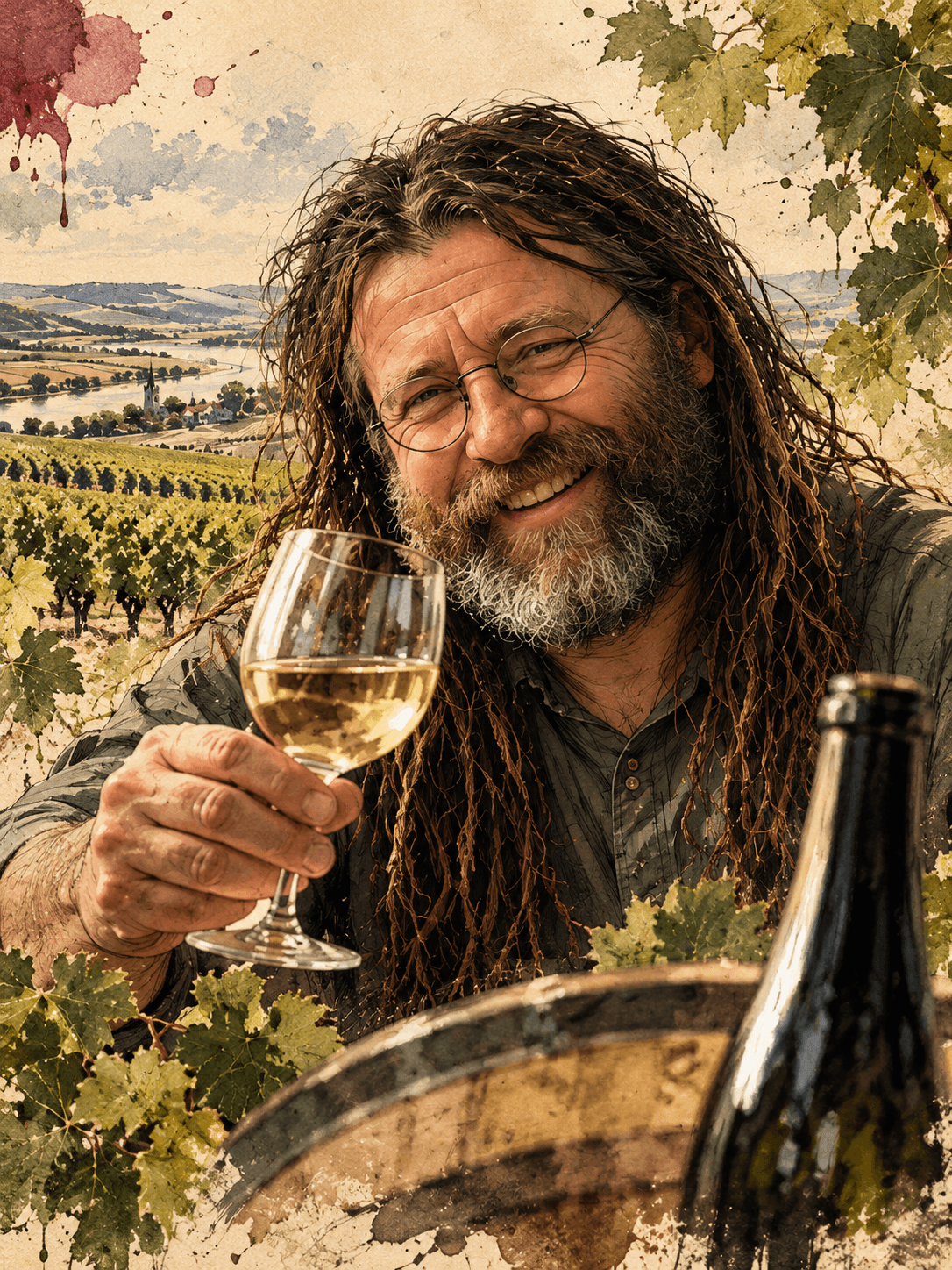
The long hair and beard became part of his public image, but the more important detail was temperament.
He was competitive, obsessive and famously unwilling to accept things simply because they were established practice.
Before wine, there was motorcycle racing. Later came ultralight aircraft, engines and flying.
He liked machines that demanded attention.
He liked speed, but also control.
And he approached wine with a similar intensity.
Dagueneau did not inherit a prestigious domaine and quietly preserve its reputation. He had to create his own position in a region where Sauvignon Blanc was already well understood commercially.
Being outside the established hierarchy gave him a certain freedom.
He had less reason to protect the existing rules.
SAUVIGNON, WITHOUT THE CLICHÉS
Dagueneau’s problem was never Sauvignon Blanc itself.
The problem was how easily the grape could become a formula.
Aromatic. Crisp. Recognisable.
Good enough.
He wanted to remove that complacency.
That meant lower yields, severe vineyard work, careful attention to individual parcels and far more concern with maturity than with simply preserving obvious varietal freshness.
In the cellar, he experimented with élevage and with barrels made specifically for his wines.
None of this was designed to make Sauvignon Blanc louder.
Quite the opposite.
The ambition was to strip away the shortcuts that made it predictable.
If the farming was precise enough and the fruit mature enough, perhaps the grape could stop performing “Sauvignon Blanc” and start showing somewhere more specific.
PLACE BEFORE VARIETY
This is where Dagueneau’s work becomes more important than his personality.
His vineyards around Saint-Andelain are not visually dramatic in the way that some famous wine landscapes are.
There are no heroic terraces or vertiginous slopes.
From a distance, the countryside can seem almost gentle: rolling farmland, vines, fields and low hills.
But Dagueneau treated differences within that landscape as consequential.
For him, Sauvignon Blanc was not the destination.
It was the instrument.
The interesting question was what happened when the same grape encountered different soils, exposures and farming decisions.
That may sound obvious now.
It was much less obvious when Sauvignon Blanc was still largely discussed through varietal aroma.

SILEX CHANGED THE CONVERSATION
The name most closely associated with Dagueneau is Silex.
Flint.
Today, the language around serious Sauvignon Blanc often circles around stone, smoke, tension, minerality and geology.
Some of that vocabulary has become so familiar that it is easy to forget how powerful the shift once was.
Dagueneau helped move the conversation away from:
What does Sauvignon Blanc smell like?
toward:
Where did this wine come from?
The importance of Silex is not the simplistic idea that a piece of flint somehow travels through the roots and reappears as flavour in the glass.
The importance is conceptual.
The name forces attention toward the ground.
Toward farming.
Toward place.
The grape is no longer the entire story.
FLIGHT, MACHINES, PRECISION
The aircraft can look like colourful biographical trivia.
It is more interesting than that.
Ultralight flying leaves very little distance between the pilot, the machine and the environment.
Wind matters.
Balance matters.
Mechanical response matters.
Small decisions matter.
That combination of exposure and control feels strangely close to Dagueneau’s wines.
His public image suggested wildness, but his work was anything but casual.
He could be confrontational, restless and deeply independent, yet the wines were built around precision.
That tension is essential to understanding him.

WHY HE COULDN’T BE COPIED
It is tempting to turn an influential winemaker into a recipe.
Low yields.
Old vines.
Native fermentations.
Special barrels.
Flint soils.
Meticulous vineyard work.
Copy the ingredients and perhaps you get the result.
But Dagueneau’s influence does not really work that way.
His most important contribution was not a cellar technique.
It was a change in ambition.
He treated Sauvignon Blanc — a grape associated with immediacy, freshness and recognisable aroma — with the seriousness usually reserved for varieties and regions considered more prestigious.
That changed expectations.
Once someone demonstrates that a familiar grape can carry far more complexity than the market usually asks of it, “good enough” becomes harder to defend.
THE CONTRADICTION
This may be the most interesting thing about Dagueneau.
He looked like a rebel.
He worked like a perfectionist.
The racing, the aircraft, the hair and the confrontational reputation make it easy to reduce him to the archetype of the wild winemaker.
But rebellion alone does not produce precise wine.
Discipline does.
His real radicalism was not disorder.
It was refusing to lower the standard.
WHAT REMAINS
Didier Dagueneau died in 2008 after an ultralight aircraft accident.
His domaine continued with his family, but by then the larger change had already happened.
He had helped redefine the ambition surrounding Sauvignon Blanc.
After Dagueneau, it became harder to think of Pouilly-Fumé only in terms of grape variety and familiar aroma.
The possibility had been demonstrated:
Sauvignon Blanc could be rigorous.
Long-lived.
Site-specific.
Intellectually serious.
And perhaps that is his real legacy.
Not the beard.
Not the aircraft.
Not even Silex.
It is the idea that familiarity is never an excuse for mediocrity.

Wine is never just wine. Sometimes one person changes what an entire grape is allowed to become.
By the time Didier Dagueneau began making wine in Pouilly-Fumé in the early 1980s, Sauvignon Blanc already came with a ready-made vocabulary.
Citrus. Grass. Gooseberry. Smoke. Freshness.
The grape was easy to recognise, easy to describe and, increasingly, easy to sell.
Dagueneau’s response was not to reject Sauvignon Blanc.
It was to distrust everything people thought they already knew about it.
What if the grape was capable of more than reproducing familiar aromas? What if a bottle of Pouilly-Fumé could speak as much about a particular slope, soil or growing season as it did about Sauvignon itself?
That question became the centre of his work.
THE OUTSIDER
Dagueneau never looked particularly interested in behaving like the respectable French vigneron.
The long hair and beard became part of his public image, but the more important detail was temperament.
He was competitive, obsessive and famously unwilling to accept things simply because they were established practice.
Before wine, there was motorcycle racing. Later came ultralight aircraft, engines and flying.
He liked machines that demanded attention.
He liked speed, but also control.
And he approached wine with a similar intensity.
Dagueneau did not inherit a prestigious domaine and quietly preserve its reputation. He had to create his own position in a region where Sauvignon Blanc was already well understood commercially.
Being outside the established hierarchy gave him a certain freedom.
He had less reason to protect the existing rules.
SAUVIGNON, WITHOUT THE CLICHÉS
Dagueneau’s problem was never Sauvignon Blanc itself.
The problem was how easily the grape could become a formula.
Aromatic. Crisp. Recognisable.
Good enough.
He wanted to remove that complacency.
That meant lower yields, severe vineyard work, careful attention to individual parcels and far more concern with maturity than with simply preserving obvious varietal freshness.
In the cellar, he experimented with élevage and with barrels made specifically for his wines.
None of this was designed to make Sauvignon Blanc louder.
Quite the opposite.
The ambition was to strip away the shortcuts that made it predictable.
If the farming was precise enough and the fruit mature enough, perhaps the grape could stop performing “Sauvignon Blanc” and start showing somewhere more specific.
PLACE BEFORE VARIETY
This is where Dagueneau’s work becomes more important than his personality.
His vineyards around Saint-Andelain are not visually dramatic in the way that some famous wine landscapes are.
There are no heroic terraces or vertiginous slopes.
From a distance, the countryside can seem almost gentle: rolling farmland, vines, fields and low hills.
But Dagueneau treated differences within that landscape as consequential.
For him, Sauvignon Blanc was not the destination.
It was the instrument.
The interesting question was what happened when the same grape encountered different soils, exposures and farming decisions.
That may sound obvious now.
It was much less obvious when Sauvignon Blanc was still largely discussed through varietal aroma.
SILEX CHANGED THE CONVERSATION
The name most closely associated with Dagueneau is Silex.
Flint.
Today, the language around serious Sauvignon Blanc often circles around stone, smoke, tension, minerality and geology.
Some of that vocabulary has become so familiar that it is easy to forget how powerful the shift once was.
Dagueneau helped move the conversation away from:
What does Sauvignon Blanc smell like?
toward:
Where did this wine come from?
The importance of Silex is not the simplistic idea that a piece of flint somehow travels through the roots and reappears as flavour in the glass.
The importance is conceptual.
The name forces attention toward the ground.
Toward farming.
Toward place.
The grape is no longer the entire story.
FLIGHT, MACHINES, PRECISION
The aircraft can look like colourful biographical trivia.
It is more interesting than that.
Ultralight flying leaves very little distance between the pilot, the machine and the environment.
Wind matters.
Balance matters.
Mechanical response matters.
Small decisions matter.
That combination of exposure and control feels strangely close to Dagueneau’s wines.
His public image suggested wildness, but his work was anything but casual.
He could be confrontational, restless and deeply independent, yet the wines were built around precision.
That tension is essential to understanding him.
WHY HE COULDN’T BE COPIED
It is tempting to turn an influential winemaker into a recipe.
Low yields.
Old vines.
Native fermentations.
Special barrels.
Flint soils.
Meticulous vineyard work.
Copy the ingredients and perhaps you get the result.
But Dagueneau’s influence does not really work that way.
His most important contribution was not a cellar technique.
It was a change in ambition.
He treated Sauvignon Blanc — a grape associated with immediacy, freshness and recognisable aroma — with the seriousness usually reserved for varieties and regions considered more prestigious.
That changed expectations.
Once someone demonstrates that a familiar grape can carry far more complexity than the market usually asks of it, “good enough” becomes harder to defend.
THE CONTRADICTION
This may be the most interesting thing about Dagueneau.
He looked like a rebel.
He worked like a perfectionist.
The racing, the aircraft, the hair and the confrontational reputation make it easy to reduce him to the archetype of the wild winemaker.
But rebellion alone does not produce precise wine.
Discipline does.
His real radicalism was not disorder.
It was refusing to lower the standard.
WHAT REMAINS
Didier Dagueneau died in 2008 after an ultralight aircraft accident.
His domaine continued with his family, but by then the larger change had already happened.
He had helped redefine the ambition surrounding Sauvignon Blanc.
After Dagueneau, it became harder to think of Pouilly-Fumé only in terms of grape variety and familiar aroma.
The possibility had been demonstrated:
Sauvignon Blanc could be rigorous.
Long-lived.
Site-specific.
Intellectually serious.
And perhaps that is his real legacy.
Not the beard.
Not the aircraft.
Not even Silex.
It is the idea that familiarity is never an excuse for mediocrity.
Wine is never just wine. Sometimes one person changes what an entire grape is allowed to become.